Understand the requirements of HAZMAT transportation and how truck drivers can avoid violations.
HAZMAT transportation can be lucrative for carriers but it requires understanding common Department of Transportation violations and how to avoid them in regards to hazardous materials.
HAZMAT transportation can be extremely dangerous for truck drivers which is why it typically pays at a higher rate. To enforce regulations and promote the safety of HAZMAT transportation, the FMCSA conducts over 154,000 annual roadside inspections, with an estimated 35,000 DOT HAZMAT violations reported. That’s nearly 23 percent of inspections resulting in a violation!
Want to obtain a HAZMAT endorsement on your CDL and potentially earn more with HAZMAT transportation?

GHS Transport Pictograms Cheat Sheet for hazardous materials from Global Chemical Resources.


Types of Truck Freight [h2] Types of Truck Freight [/h2]
[p] There are many types of truck freight, each with a unique yet important role for moving different truck freight across the nation and load boards make it easy to find truck freight.
[/p]
[h2] Truck Freight [/h2]
[p]Truck freight is responsible for <a href="https://truckerpath.com/blog/trucking-industry-trends/">70 percent of all cargo that is transported in America</a>. That's over 10 billion tons each year![/p]
[p]Companies ship a variety of truck freight ranging in size, value, and contents. Ever wonder how ice cream somehow stays frozen when shipped across America or how huge machines make their way from a factory in Kentucky to a warehouse in California? It's all thanks to truck freight and the specific trailers and equipment necessary for the dedicated men and women of the trucking industry to haul the freight.
[/p]
[h2] Find Truck Freight on Truckloads Load Board[/h2]
[p]If you have <a href="https://truckerpath.com/blog/trucking-authority/">trucking authority</a> and are looking for truck freight loads you can use Truckloads free load board to customize your truck freight search and filter results that are the best fit for you. You can choose from 11 different trailer equipment types when searching for loads and search based on location, date, deadhead and even load weight. [/p]
[p]Use Truckloads web version or download the app and view over three million loads per month including unlimited access to premium loads as well as the ability to call a broker right from the app from anywhere. Stay loaded and know where nearby truck freight loads are with Trucker Path Truckloads![/p]
[button text="Try Truckloads for Free" href="https://truckerpath.com/truckloads/free-load-board/?utm_source=Blog&utm_medium=truckfreight&utm_campaign=Aug10" width="250px"]
[video id=snyBYpnuhWw]
[h2] Flatbed Trucks [/h2]
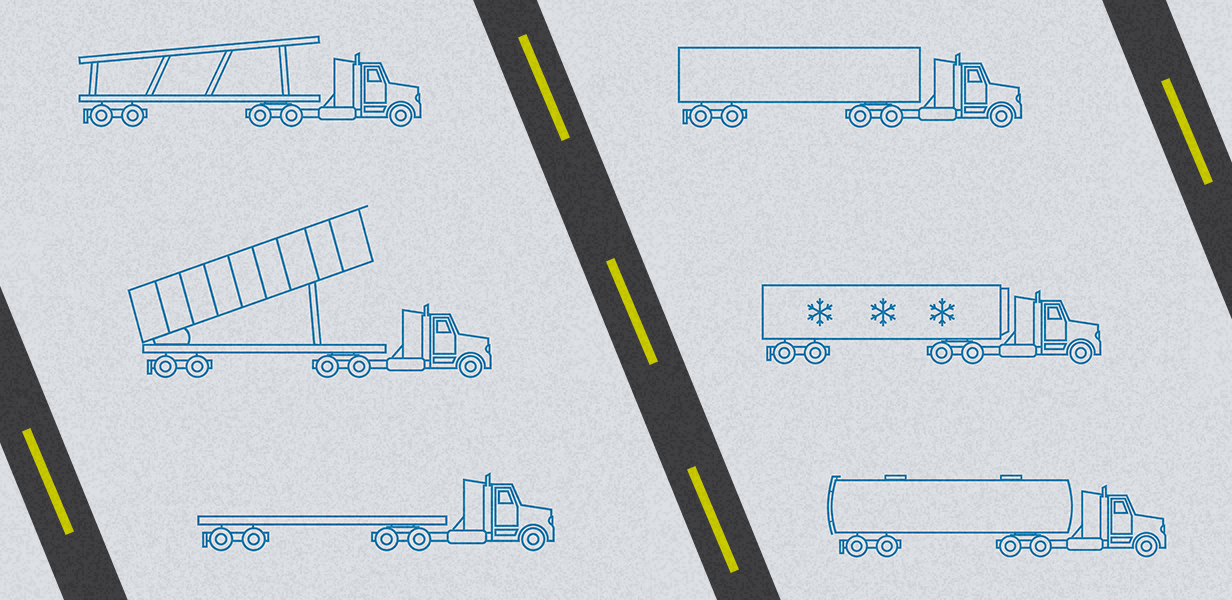
[p]Flatbed trucks are truck freight with a trailer that is leveled off and open with no sides or top, hence the name flatbed. This design makes it easier to load and unload large freight that otherwise couldn't fit into a standard 53-foot trailer. Truck freight is secured on flatbeds with straps, tarps and other locking devices to keep the load tied down. [/p]
[p]
Generally, flatbed trucks are used as truck freight for construction goods, large manufactured parts, and various oversized loads. An oversized load is any truck freight that is over 8.5 feet wide. This type of truck freight requires red flags and lights to help identify the oversized truck freight on the road.
[/p]
[img src="/uploads/2017/08/Flat-Bed-Final.png" alt="flatbed truck freight"]
[h2] Step Deck Trucks[/h2]
[p] Similar to flatbed trucks, step deck trucks also have a level surface that is open. The main difference between truck freight with a flatbed and step deck truck is that the step deck truck will have a lower position set closer to the ground. This helps truck freight that is taller sit lower to avoid potential hazards such as bridge clearances. [/p]
[img src="/uploads/2017/08/Step-Deck-Final.png" alt="step deck truck freight"]
[h2] Reefer Trucks [/h2]
[p]Also known as refrigerated trucks, reefer trucks are truck freight with a trailer that is temperature controlled in order to haul goods that must remain within a certain temperature zone at all times such as food. While reefer trucks commonly haul loads that include perishable foods, they also transport things like pharmaceuticals, chemicals, and other <a href="https://truckerpath.com/blog/hazmat-transportation/">hazmat materials</a>, though not at the same time of course. [/p]
[img src="/uploads/2017/08/Reefer-Final.png" alt="reefer truck freight"]
[h2] Dry Vans [/h2]
[p]Dry vans are the most common truck freight. They are typically a standard 53-foot trailer like the ones you see connected on the back of a semi-truck on the interstate that might say Walmart, Target or Schneider. Although not an actual van, they are the most common truck freight to haul goods, providing a trailer that is sealed and protected from the elements. [/p]
[p]
Look around your home and chances are the things you see were hauled by dry van truck freight. Dry van loads are used by a variety of companies looking to ship anything from consumer products, home goods, electronics, and a variety of other products that don't require refrigeration.
[/p]
[p]
Choosing to haul truck freight with a dry van can result in an increased opportunity in available freight to haul due to the volume of truck freight shippers have for dry vans. [/p]
[img src="/uploads/2017/08/Van-Final.png" alt="Dry Van freight"]
[h2] Other Types of Truck Freight [/h2]
[ul] There are several other truck freight loads you'll find as well, including:
[p]
[li]Auto Carrier - trailer that hauls automobiles and other vehicles[/li]
[img src="/uploads/2017/08/Auto-Trailer-Final.png" alt="auto carrier freight"]
[li] Dump Trailer - trailer with a lift to incline and allow for loads to be dumped [/li]
[img src="/uploads/2017/08/dump-trailer-Final.png" alt="dump trailer freight"]
[li] Tanker - trailer that is a long cylinder shape hauling liquids like fuel[/li]
[img src="/uploads/2017/08/Tanker-Final.png" alt="tanker truck freight"]
[/ul]
COVID19: State of Trucking <h4>By Trucker Path</h4>
<h3></h3>
<h3></h3>
<img src="https://truckerpath.com/uploads/2020/05/b5.png" alt="Trucker Path COVID19" />
<h3><strong>Trucker Path COVID-19 Initiatives</strong></h3>
The Trucker Path team is actively monitoring the spread of the Coronavirus (COVID-19) and preparing resources to assist truckers as they help keep America running.
<h2></h2>
In addition to providing updates on the Trucker Path <a href="https://www.facebook.com/TruckerPath/">Facebook Page</a>, a dedicated COVID19 thread has been created in the official Trucker Path forum.
<h2></h2>
A COVID-19 Tracker has been introduced on the Trucker Path mobile app which is available on <a href="http://bit.ly/truckerpathios">iOS</a> and <a href="http://bit.ly/truckerpathdroid">Google Play</a>. This feature will enable truckers to easily check the spread of the Coronavirus and see insights both for America and abroad, with live updates on infections and recoveries.
<h2></h2>
Along side the COVID-19 Tracker is the COVID-19 Navigation Tool which has been integrated on the Turn-by-Turn feature to track the latest information regarding reported cases and infected areas and provide alternate routing.
</a>
<h2></h2>
<h2></h2>
<img src="https://truckerpath.com/uploads/2020/05/b7.jpeg" alt="FMCSA" />
<h3><strong>FMCSA Emergency Declaration to be extended until June 14</strong></h3>
The agency's COVID-19 Emergency Declaration has been extended until June 14. The original declaration was set to expire last Friday.
Full announcement can be found <a href="https://www.fmcsa.dot.gov/emergency/extension-expanded-emergency-declaration-no-2020-002-under-49-cfr-ss-39025">here</a>.
<h2></h2>
FMCSA’s emergency declaration provides for regulatory relief for commercial motor vehicle operations providing direct assistance supporting emergency relief efforts intended to meet immediate needs for:
Medical supplies and equipment related to the testing, diagnosis and treatment of COVID-19
Supplies and equipment necessary for community safety, sanitation, and prevention of community transmission of COVID-19 such as masks, gloves, hand sanitizer, soap and disinfectants
Food, paper products and other groceries for emergency restocking of distribution centers or stores
Immediate precursor raw materials — such as paper, plastic or alcohol—that are required and to be used for the manufacture of essential items
Fuel
Equipment, supplies and persons needed to establish and manage temporary housing or quarantines
Persons designated by federal, state or local authorities for medical, isolation, or quarantine purposes
Persons necessary to provide other medical or emergency services
</a>
<h3></h3>
<h2></h2>
<img src="https://truckerpath.com/uploads/2020/05/b6.jpeg" alt="CDC" />
<h3><strong>CDC Guidelines for Long Haul Truck Drivers</strong></h3>
The Center for Disease Control and Prevention has recently updated guidelines for long haul truck drivers in the wake of the COVID-19 pandemic.
Here are some prescribed steps to avoid contamination and reduce spread.
<ul>
<li>Notify your supervisor and stay home if having symptoms.</li>
<li>Make a plan with your employer and your family as to what to do if you become sick while you’re on the road. Include where to stop, where and how to seek medical advice and treatment, and plans for freight delivery.</li>
<li>Limit close contact with others by maintaining a distance of at least 6 feet when possible.</li>
<li>CDC recommends wearing cloth face coverings in public settings where other social distancing measures are difficult to maintain, especially in areas of significant community-based transmission. </li>
<li>Clean and disinfect frequently touched surfaces on a routine basis.</li>
<li>Practice proper hand hygiene. This is an important infection control measure. Wash your hands regularly with soap and water for at least 20 seconds, or use an alcohol-based hand sanitizer containing at least 60% alcohol.</li>
<li>Avoid touching surfaces often touched by others when outside of the cab.</li>
<li>Do not share personal protective equipment (PPE) (such as vests, safety glasses, hard hats),tools, phones, radios, or other personal items.</li>
<li>Use pre-qualified truck stops or hotels identified by your employer as having appropriate COVID-19 protections.</li>
<li>When team driving or ride-alongs are required, wear cloth face coverings inside the truck and avoid sharing bedding in the sleeper berth.</li>
</ul>
Full guidelines can be viewed <a href="https://www.cdc.gov/coronavirus/2019-ncov/community/organizations/long-haul-trucking.html">here</a>.
Trucking Industry Statistics [p] Here's a closer look at the trucking industry statistics highlighting the significance of the backbone of America - truckers.[/p]
[h2]Trucking Industry Statistics[/h2]
[p] The trucking industry statistics are truly remarkable. It's an industry topping $726.4 billion in revenue for 2015 and responsible for six percent of all jobs in America. [/p]
[p]If you bought it, they brought it. [a href="https://app.appsflyer.com/com.sixdays.truckerpath?pid=Social Facebook"]Truck drivers[/a] keep America rolling by driving countless and lonely hours delivering the cargo we desire. Without trucks to ship things, those shelves would be mighty bare and those same-day delivering services from your online shopping wouldn't be possible without truckers.[/p]
[p]Don't believe us? Check out the trucking industry statistics.[/p]
[h2]The Trucking Industry Powers America[/h2]
[p]Merge onto any highway and you'll see countless semi trucks heading in either direction of the road. Seems like they're endless amounts of them right? You would be correct, in fact [a href="https://app.appsflyer.com/com.truckerpath.truckloads?pid=Social Facebook"]80 percent of all cargo in the USA[/a]![/p]
[img src="/uploads/2016/12/Trucking_InfographicsPT1.jpg" alt=""]
[h2]The Trucking Industry Can Be Dangerous[/h2]
[p]There are 3.5 million truck drivers in the trucking industry who put their life at risk delivering an array of commodities and goods. Drivers operate heavy-duty trucks with a load weighing as much as 80,000 pounds. In 2015, 852 truck drivers lost their life while working, making truck driver the most dangerous job in the USA. So remember to give truck drivers space and don't tailgate.[/p]
[img src="/uploads/2016/12/Trucking_InfographicsPT2.jpg" alt=""]
[h2]What Do Truck Drivers Haul?[/h2]
[p]Truck drivers haul a variety of goods with machinery, electronic and motorized vehicles making up 27 percent of goods shipped by truck drivers in America. The most common thing trucks haul is machinery, followed by electronics and motorized vehicles. Additionally, mixed freight includes commodities such as food and restaurant supplies.[/p]
[img src="/uploads/2016/12/Trucking_InfographicsPT3.jpg" alt=""]
[p]Let's face it, without the trucking industry we wouldn't be able to enjoy the things we have. Shelves would be empty and people would undoubtedly be in a state of panic if that happens. The trucking industry statistics don't lie![/p]